Synchronous context-free grammars (SynCFG or SCFG; not to be confused with stochastic CFGs) are a type of formal grammar designed for use in transfer-based machine translation. Rules in these grammars apply to two languages at the same time, capturing grammatical structures that are each other's translations. The theory of SynCFGs borrows from syntax-directed transduction and syntax-based machine translation, modeling the reordering of clauses that occurs when translating a sentence by correspondences between phrase-structure rules in the source and target languages. Performance of SCFG-based MT systems has been found comparable with, or even better than, state-of-the-art phrase-based machine translation systems. Several algorithms exist to perform translation using SynCFGs. == Formalism == Rules in a SynCFG are superficially similar to CFG rules, except that they specify the structure of two phrases at the same time; one in the source language (the language being translated) and one in the target language. Numeric indices indicate correspondences between non-terminals in both constituent trees. Chiang gives the Chinese/English example: X → (yu X1 you X2, have X2 with X1) This rule indicates that an X phrase can be formed in Chinese with the structure "yu X1 you X2", where X1 and X2 are variables standing in for subphrases; and that the corresponding structure in English is "have X2 with X1" where X1 and X2 are independently translated to English. == Software == cdec, MT decoding package that supports SynCFGs Joshua, a machine translation decoding system written in Java
Eat App
Eat App is a global restaurant technology company that provides a cloud-based management platform for restaurants, hotels, and other venues. The platform enables venues to accept online reservations seamlessly, manage tables, and enhance customer relationship management (CRM). It utilizes AI to improve operational efficiency, provides marketing automation, and helps build a comprehensive guestbook. The company also offers a consumer app and website for discovering and booking restaurant tables online. According to the company, the system has seated over 100 million guests, and the number continues to grow. Eat was founded by Nezar Kadhem and David Feuillard in 2015 and has raised $13M to date from Silicon Valley's 500 startups, Middle East Venture Partners (MEVP), Derayah VC, amongst other business angels. The company is currently operational across the world, with offices in Dubai and the United States. == Product overview == === For restaurants === Eat App’s reservation system allows for a digital record of all reservations, all guests that have previously visited the restaurant, as well as analytics on the performance of the restaurant. The table management feature simplifies traditional restaurant operations by providing a live snapshot of current status, seating optimization, and shift management. The CRM and analytics suite gathers and monitors data to build a segmented guestbook for personalized marketing and provides dashboards for data-driven decision-making. Additionally, the review feature makes it easy for restaurants to automatically collect reviews from their guests. Additionally, Eat App includes a chit printer function that seamlessly prints reservation details at host stands and a review management feature that allows restaurants to manage online reviews directly within the platform. == History == In February 2015, Eat App raised $300k from Bahrain-based business angel group TENMOU. In June 2018, Eat raised $1.2 million from Dubai-based Middle East Venture Partners (MEVP). In February 2020, Eat App raised $5 million in a Series B funding round led by 500 Startups, Derayah Venture Fund, and MEVP, with participation from a few angel investors and family members. In February 2021, Eat App launched its technology with The Emaar Hospitality Group, implementing it across over 50 restaurants in Emaar properties and hotels. The cloud-based system runs natively on iPads in each restaurant, providing Emaar staff access to reservations and guest information, and integrates with the U by Emaar loyalty app to personalize service. On September 28, 2022, Eat App announced the closing of an $11 million Series B funding round. The investment was led by Middle East Venture Partners (MEVP), 500 Startups, Derayah Venture Capital, Dallah Albaraka, Ali Zaid Al Quraishi & Brothers Company, and Rasameel Investment Company, with participation from existing investors.
Trebel (music app)
Trebel is an on-demand music download and discovery platform developed by M&M Media Inc. The company's business model aims to combat digital music piracy by giving users access to on-demand music at no cost while delivering fair compensation to artists and music rights holders. Trebel has a patent that allows it to market itself as the only international music service in which users can legally download music and listen to it offline for free. As of March 2023, Trebel has a catalog of 75 million songs from record labels such as Universal Music Group, Sony Music Entertainment, Warner Music Group and hundreds of independent labels. Trebel is based in Stamford, Connecticut. with additional locations in Mexico City, Jakarta, Bogota, Los Angeles and Miami. The app is available in the Apple App Store, Google Play Store, and Huawei AppGallery. == History == Trebel was founded in 2014 by Gary Mekikian, who was previously the co-founder of answerFriend, Inc., which commercialized web based question-answering technologies and merged with Electric Knowledge, forming InQuira. This company was eventually acquired by Oracle Corporation in 2011. His co-founders at Trebel include Stanford classmates Corey Jones and Luis Soto Durazo, as well as his daughters Grace and Juliette. Mekikian envisioned Trebel as an alternative to music piracy after a high school classmate of his daughters was targeted by cyberattackers while illegally downloading music online. Trebel was initially released in 2015 under the name Project Carmen to students at Ohio State, Santa Monica College, Cal State Fullerton, UCLA and Long Beach State. In its original incarnation, the service planned to target students at 3,000 universities and 30,000 high schools in the United States. A beta version of the app was introduced in 2016 with content from Universal Music Group and Warner Music Group. Trebel launched commercially in the United States and Mexico in 2018. In 2018, Mexican mass-media corporation Televisa also became a minority investor in Trebel. In May 2020, during the early months of the COVID-19 pandemic, Trebel was a digital broadcast partner for Se Agradece, a concert produced in Mexico by Televisa to honor frontline COVID workers that featured artists such as Rosalia, J Balvin, Maluma and Ricky Martin. In June 2021, Trebel reached 3 million monthly active users. In October 2021, Trebel signed a music licensing agreement with Merlin Network, the licensing agency for the independent music sector that controls an estimated 12% of the global digital recorded music market. In January 2022, Trebel announced a strategic alliance with MNC Corporation, an Indonesian media conglomerate, which also became a minority backer of the company. In March 2022, Trebel reported 5.2 million monthly active users as a result of growth in Latin America. In the same month,, Latin music star Maluma became a backer of Trebel and an advisor to Gary Mekikian, helping expand the service throughout Latin America. On April 18, 2022, Trebel launched in Indonesia during the finale of the music competition show X Factor Indonesia. Trebel also signed a deal that month with Soccer Media Solutions, a sports and entertainment marketing agency in Mexico, to sell Trebel’s premium advertising inventory through Soccer Media. In May 2022, Guillermo Ochoa, goalkeeper for the Mexican national soccer team, invested in Trebel and became an ambassador for the company. On October 2, 2022, Trebel collaborated with Musica Studios, one of the largest music companies in Indonesia, on the production of a music festival in Jakarta titled Trebel Music Fest. The event featured performances by top Indonesian music artists such as Noah, Nidji, and d'Masiv. In October 2022, Trebel launched in Colombia. The service reached 1.2 million monthly active users in Colombia six months after launching. In December 2022, Trebel collaborated with KFC in Indonesia on the release of a KFC digital music program using a product called Trebel Max. As part of the program, KFC customers who bought the Crazy Superstar Combo package at KFC received a subscription to Trebel Max for 30 days. Trebel announced the launch of Trebel AI in May 2023. Trebel AI uses ChatGPT-powered technology to generate playlists based on natural language queries from users. In Indonesia, the Trebel AI feature was announced during a broadcast of the show Indonesian Idol XII that took place on May 8, 2023. In July 2023, Trebel reached more than 13 million monthly active users. In November 2023, Trebel became a featured app on the Discord app directory. Discord users that add the Trebel bot to their servers have access to Trebel's on-demand music library and have the exclusive privilege of being DJ's during server sessions with up to 150 concurrent listeners. == Platform == === Features === Trebel has a patent that allows it to market itself as the only international music service in which users can legally download music and listen to it offline for free. As of March 2023, Trebel has a catalog of 75 million songs from record labels such as Universal Music Group, Sony Music Entertainment, Warner Music Group and hundreds of independent labels. Trebel offers unlimited music downloads that are playable in the app by registered users only. Offline listening is free to all users and not blocked by a paywall. Users can search for music based on song, artist, album, browsing friends' recent activity, and through other users' playlists. The app also offers free cloud storage for downloaded songs. Trebel also contains a feature called SongID, which identifies music being played nearby using a short sample, then offers it for download on the service. Podcasts are available for free listening on the service as well. === Business model === Trebel uses a business model that generates revenue from the sale of digital advertising as well as user interactions with branded experiences, and consumption of virtual goods within the app (akin to mobile games). The app also features a brand takeover feature called Trebel Max, which offers unlimited access in exchange for users engaging with experiences offered by specific brands. Trebel’s brand partners include Uber, KFC, Walmart, Coca-Cola, Amazon and P&G. === Content === In September 2022, Trebel secured an exclusive release of the song “Suara Hatiku” by Indonesian actress Amanda Monopo. As of March 2023, Trebel offers 75 million songs through licensing agreements with Universal Music Group, Sony Music Entertainment, Warner Music Group and global indie rights agency Merlin. == Awards == In 2023, Trebel won three Google Play awards including "Best App of 2023", "Best Everyday Essentials" and "Users' Choice".
Micro stuttering
Micro stuttering is a visual artifact in real-time computer graphics in which the time intervals between consecutively displayed frames are uneven, even though the average frame rate reported by benchmarking software appears adequate. Tools such as 3DMark typically compute frame rates over intervals of one second or more, which can conceal momentary drops in the instantaneous frame rate that the viewer perceives as hitching or jerking of on-screen motion. At low frame rates the effect is visible as a stutter in moving images, degrading the experience in interactive applications such as video games. In severe cases a lower but more consistent frame rate can appear smoother than a higher but more erratic one. The term gained prominence in the late 2000s in discussions of multi-GPU rendering (see History), but micro stuttering also affects single-GPU systems. Common causes on modern hardware include real-time shader compilation, asset streaming from storage, VRAM exhaustion, and driver bugs. == Causes == === Shader compilation === A common cause of micro stuttering on modern PCs is real-time shader compilation. Shaders are small programs that instruct the GPU on how to render visual effects such as lighting, shadows, and reflections. On consoles, developers can pre-compile all shaders for the known, fixed hardware. On PCs, the variety of GPU architectures means shaders must often be compiled at run time, either when the game launches or during gameplay itself. When the rendering engine encounters a shader that has not yet been compiled, the CPU must finish the compilation before the GPU can draw the affected object. This causes a spike in frame time that the player perceives as a hitch. The problem has been particularly associated with games built on Unreal Engine 4 running under DirectX 12, because DX12 shifts more shader management responsibility to the application. Several techniques exist to reduce shader compilation stutter. Pipeline State Object (PSO) pre-caching records the shader permutations used at runtime so that they can be compiled in advance on subsequent launches. Asynchronous shader compilation moves the work to background CPU threads to avoid blocking the main rendering thread. Platform-level services such as Steam's shader pre-caching distribute previously compiled shaders to users with matching GPU hardware. The Steam Deck, which contains a single fixed GPU, benefits from pre-compiled shader caches because all units share the same hardware configuration. === Other causes === Micro stuttering on single-GPU systems can have several additional causes. CPU bottlenecks or scheduling interruptions from background tasks can prevent the processor from preparing frames at regular intervals. Asset streaming during gameplay (loading textures, geometry, or audio from storage) can produce hitches sometimes called traversal stutter; the use of solid-state drives and technologies such as DirectStorage has reduced but not eliminated this. VRAM exhaustion forces data to be swapped between video memory and system memory over the PCI Express bus, which is slower. Graphics driver bugs can also introduce stutter; Nvidia released hotfix driver 551.46 in February 2024 to correct intermittent micro stuttering when V-Sync was enabled. == Measurement == Micro stuttering drew attention to the limitations of average frame rate as a performance metric. In 2013, Scott Wasson at The Tech Report published a series of articles advocating frame time analysis, in which the delivery time of every individual frame is recorded and plotted rather than collapsed into a single frames-per-second figure. This approach was adopted by other hardware review publications in the following years. GPU reviews now routinely report 1% low and 0.1% low frame rates alongside the average. The 1% low is the average frame rate of the slowest 1% of frames in a sample; it serves as an indicator of worst-case smoothness. A large gap between the average and the 1% low suggests poor frame pacing. Tools for capturing per-frame timing data include FRAPS, PresentMon, OCAT, CapFrameX, and MSI Afterburner with RivaTuner Statistics Server. == Mitigation == === Frame pacing === Frame pacing is a software technique that regulates the timing of frame delivery to produce even intervals between displayed frames. Game engines, GPU drivers, and platform libraries all implement frame pacing strategies to varying degrees. On mobile platforms, Google provides the Android Frame Pacing library (Swappy) as part of the Android Game Development Kit. In December 2025, the Khronos Group published the VK_EXT_present_timing Vulkan extension, giving developers explicit control over presentation timing in a cross-platform graphics API for the first time. === Variable refresh rate === Variable refresh rate (VRR) display technologies allow a monitor's refresh rate to change to match the GPU's frame output. Implementations include Nvidia G-Sync (2013), AMD FreeSync (2015), and the VESA Adaptive-Sync standard built into DisplayPort 1.2a and later. VRR eliminates the screen tearing that results from a mismatch between frame rate and refresh rate, and avoids the frame-holding behaviour of V-Sync that can itself cause stutter. It is effective at smoothing moderate frame rate fluctuations but cannot compensate for large sudden spikes in frame time such as those caused by shader compilation or heavy asset streaming. VRR support has become standard in gaming monitors, televisions (via HDMI 2.1), and the Xbox Series X/S and PlayStation 5 consoles. === Frame generation === Beginning with DLSS 3 on the GeForce RTX 40 series in 2022, Nvidia introduced AI-based frame generation, which uses dedicated optical flow hardware and a neural network to create new frames between traditionally rendered ones. AMD followed with FSR 3 in 2023, using an algorithmic approach, and the AI-based FSR 4 for the Radeon RX 9000 series in 2025. DLSS 4, released in January 2025 for the GeForce RTX 50 series, can generate up to three frames per rendered frame using a technique called Multi Frame Generation. Frame generation increases the displayed frame rate but introduces its own frame pacing concerns. If the underlying rendered frames are unevenly timed, the interpolated frames can make the unevenness more apparent rather than less. DLSS 4 addresses this with hardware-level flip metering on the GPU's display engine, which controls the timing of frame presentation more precisely than the CPU-based pacing used in DLSS 3. Both vendors pair frame generation with latency-reduction features (Nvidia Reflex and AMD Anti-Lag+) to offset the additional input latency that results from inserting synthetic frames into the pipeline. === Frame rate limiters === Capping the frame rate below the display's maximum refresh rate, using tools such as RivaTuner Statistics Server, in-game limiters, or driver-level settings, is a common way to improve frame pacing. Preventing the GPU from running ahead of the display reduces variability in frame delivery times and can produce a smoother result than an uncapped but more irregular frame rate. == History == === Multi-GPU configurations === Micro stuttering was first widely documented in the late 2000s as a side effect of multi-GPU configurations using Alternate Frame Rendering (AFR), in which consecutive frames are assigned to alternating GPUs. Because each GPU may take a different amount of time to complete its assigned frame — due to varying scene complexity, driver scheduling, or inter-GPU communication overhead — the resulting frame delivery is irregular even when the average frame rate is high. Both Nvidia SLI and AMD CrossFireX were affected, with dual-GPU setups exhibiting the worst frame pacing irregularities. In 2012 benchmarks using Battlefield 3, dual Radeon HD 7970 cards in CrossFire showed 85% variation in frame delivery times compared with 7% for a single card, while dual GeForce GTX 680 cards in SLI showed only 7% variation compared with 5% for a single card. Multi-GPU micro stuttering became a significant factor in the eventual decline and discontinuation of consumer multi-GPU gaming. Nvidia restricted SLI to a handful of enthusiast-class cards from the GeForce 10 series onward, then replaced it with NVLink on the GeForce RTX 20 series, which saw limited gaming adoption. AMD ceased active CrossFire development around 2017. By the mid-2020s, neither vendor's current consumer GPUs support multi-GPU rendering for games. Other factors that contributed to the decline include DirectX 12 placing multi-GPU support in the hands of game developers rather than driver authors, the incompatibility of temporal anti-aliasing and other temporal rendering techniques with AFR, and the increasing size, power draw, and cost of individual GPUs. The third-party utility RadeonPro could reduce CrossFire micro stuttering through dynamic V-Sync and frame pacing adjustments, and AMD later introduced a driver-level frame paci
Zero-day vulnerability
A zero-day (also known as a 0-day) is a vulnerability or security hole in a computer system unknown to its developers or anyone capable of mitigating it. Until the vulnerability is remedied, threat actors can exploit it in a zero-day exploit, or zero-day attack. The term "zero-day" originally referred to the number of days since a new piece of software was released to the public, so "zero-day software" was obtained by hacking into a developer's computer before release. Eventually the term was applied to the vulnerabilities that allowed this hacking, and to the number of days that the vendor has had to fix them. Vendors who discover the vulnerability may create patches or advise workarounds to mitigate it, though users need to deploy that mitigation to eliminate the vulnerability in their systems. Zero-day attacks are severe threats. == Definition == Despite developers' goal of delivering a product that works entirely as intended, virtually all products contain software and hardware bugs. If a bug creates a security risk, it is called a vulnerability. Vulnerabilities vary in their ability to be exploited by malicious actors. Some are not usable at all, while others can be used to disrupt the device with a denial of service attack. The most dangerous allow the attacker to inject and run their own code, without the user being aware of it. Although the term "zero-day" initially referred to the time since the vendor had become aware of the vulnerability, zero-day vulnerabilities can also be defined as the subset of vulnerabilities for which no patch or other fix is available. A zero-day exploit is any exploit that takes advantage of such a vulnerability. == Exploits == An exploit is the delivery mechanism that takes advantage of the vulnerability to penetrate the target's systems, for such purposes as disrupting operations, installing malware, or exfiltrating data. Researchers Lillian Ablon and Andy Bogart write that "little is known about the true extent, use, benefit, and harm of zero-day exploits". Exploits based on zero-day vulnerabilities are considered more dangerous than those that take advantage of a known vulnerability. However, it is likely that most cyberattacks use known vulnerabilities, not zero-days. Governments of states are the primary users of zero-day exploits, not only because of the high cost of finding or buying vulnerabilities, but also the significant cost of writing the attack software. Nevertheless, anyone can use a vulnerability, and according to research by the RAND Corporation, "any serious attacker can always get an affordable zero-day for almost any target". Many targeted attacks and most advanced persistent threats rely on zero-day vulnerabilities. In 2017, the average time to develop an exploit from a zero-day vulnerability was estimated at 22 days. The difficulty of developing exploits has been increasing over time due to increased anti-exploitation features in popular software. === Window of vulnerability === Zero-day vulnerabilities are often classified as alive—meaning that there is no public knowledge of the vulnerability—and dead—the vulnerability has been disclosed, but not patched. If the software's maintainers are actively searching for vulnerabilities, it is a living vulnerability; such vulnerabilities in unmaintained software are called immortal. Zombie vulnerabilities can be exploited in older versions of the software but have been patched in newer versions. Even publicly known and zombie vulnerabilities are often exploitable for an extended period. Security patches can take months to develop, or may never be developed. A patch can have negative effects on the functionality of software and users may need to test the patch to confirm functionality and compatibility. Larger organizations may fail to identify and patch all dependencies, while smaller enterprises and personal users may not install patches. Research suggests that risk of cyberattack increases if the vulnerability is made publicly known or a patch is released. Cybercriminals can reverse engineer the patch to find the underlying vulnerability and develop exploits, often faster than users install the patch. According to research by RAND Corporation published in 2017, zero-day exploits remain usable for 6.9 years on average, although those purchased from a third party only remain usable for 1.4 years on average. The researchers were unable to determine if any particular platform or software (such as open-source software) had any relationship to the life expectancy of a zero-day vulnerability. Although the RAND researchers found that 5.7 percent of a stockpile of secret zero-day vulnerabilities will have been discovered by someone else within a year, another study found a higher overlap rate, as high as 10.8 percent to 21.9 percent per year. == Countermeasures == Because, by definition, there is no patch that can block a zero-day exploit, all systems employing the software or hardware with the vulnerability are at risk. This includes secure systems such as banks and governments that have all patches up to date. Security systems are designed around known vulnerabilities, and repeated exploitations of a zero-day exploit could continue undetected for an extended period of time. Although there have been many proposals for a system that is effective at detecting zero-day exploits, this remains an active area of research in 2023. Many organizations have adopted defense-in-depth tactics so that attacks are likely to require breaching multiple levels of security, which makes it more difficult to achieve. Conventional cybersecurity measures such as training and access control — including multi-factor authentication, least-privilege access, and air-gapping makes it harder to compromise systems with a zero-day exploit. Since writing perfectly secure software is impossible, some researchers argue that driving up the cost of exploits is considered a good strategy to reduce the burden of cyberattacks. == Market == Zero-day exploits can fetch millions of dollars. There are three main types of buyers: White: the vendor, or to third parties such as the Zero Day Initiative that disclose to the vendor. Often such disclosure is in exchange for a bug bounty. Not all companies respond positively to disclosures, as they can cause legal liability and operational overhead. It is not uncommon to receive cease-and-desist letters from software vendors after disclosing a vulnerability for free. Gray: the largest and most lucrative. Government or intelligence agencies buy zero-days and may use it in an attack, stockpile the vulnerability, or notify the vendor. The United States federal government is one of the largest buyers. As of 2013, the Five Eyes (United States, United Kingdom, Canada, Australia, and New Zealand) captured the plurality of the market and other significant purchasers included Russia, India, Brazil, Malaysia, Singapore, North Korea, and Iran. Middle Eastern countries were poised to become the biggest spenders. Black: organized crime, which typically prefers exploit software rather than just knowledge of a vulnerability. These users are more likely to employ "half-days" where a patch is already available. In 2015, the markets for government and crime were estimated at least ten times larger than the white market. Sellers are often hacker groups that seek out vulnerabilities in widely used software for financial reward. Some will only sell to certain buyers, while others will sell to anyone. White market sellers are more likely to be motivated by non pecuniary rewards such as recognition and intellectual challenge. Selling zero-day exploits is legal. Despite calls for more regulation, law professor Mailyn Fidler says there is little chance of an international agreement because key players such as Russia and Israel are not interested. The sellers and buyers that trade in zero-days tend to be secretive, relying on non-disclosure agreements and classified information laws to keep the exploits secret. If the vulnerability becomes known, it can be patched and its value consequently crashes. Because the market lacks transparency, it can be hard for parties to find a fair price. Sellers might not be paid if the vulnerability was disclosed before it was verified, or if the buyer declined to purchase it but used it anyway. With the proliferation of middlemen, sellers could never know to what use the exploits could be put. Buyers could not guarantee that the exploit was not sold to another party. Both buyers and sellers advertise on the dark web. Research published in 2022 based on maximum prices paid as quoted by a single exploit broker found a 44 percent annualized inflation rate in exploit pricing. Remote zero-click exploits could fetch the highest price, while those that require local access to the device are much cheaper. Vulnerabilities in widely used software are also more expensive. They estimated that around 400 to 1,500 people sold exploits to th
Landmark point
In morphometrics, landmark point or shortly landmark is a point in a shape object in which correspondences between and within the populations of the object are preserved. In other disciplines, landmarks may be known as vertices, anchor points, control points, sites, profile points, 'sampling' points, nodes, markers, fiducial markers, etc. Landmarks can be defined either manually by experts or automatically by a computer program. There are three basic types of landmarks: anatomical landmarks, mathematical landmarks or pseudo-landmarks. An anatomical landmark is a biologically-meaningful point in an organism. Usually experts define anatomical points to ensure their correspondences within the same species. Examples of anatomical landmark in shape of a skull are the eye corner, tip of the nose, jaw, etc. Anatomical landmarks determine homologous parts of an organism, which share a common ancestry. Mathematical landmarks are points in a shape that are located according to some mathematical or geometrical property, for instance, a high curvature point or an extreme point. A computer program usually determines mathematical landmarks used for an automatic pattern recognition. Pseudo-landmarks are constructed points located between anatomical or mathematical landmarks. A typical example is an equally spaced set of points between two anatomical landmarks to get more sample points from a shape. Pseudo-landmarks are useful during shape matching, when the matching process requires a large number of points.
Kinematic chain
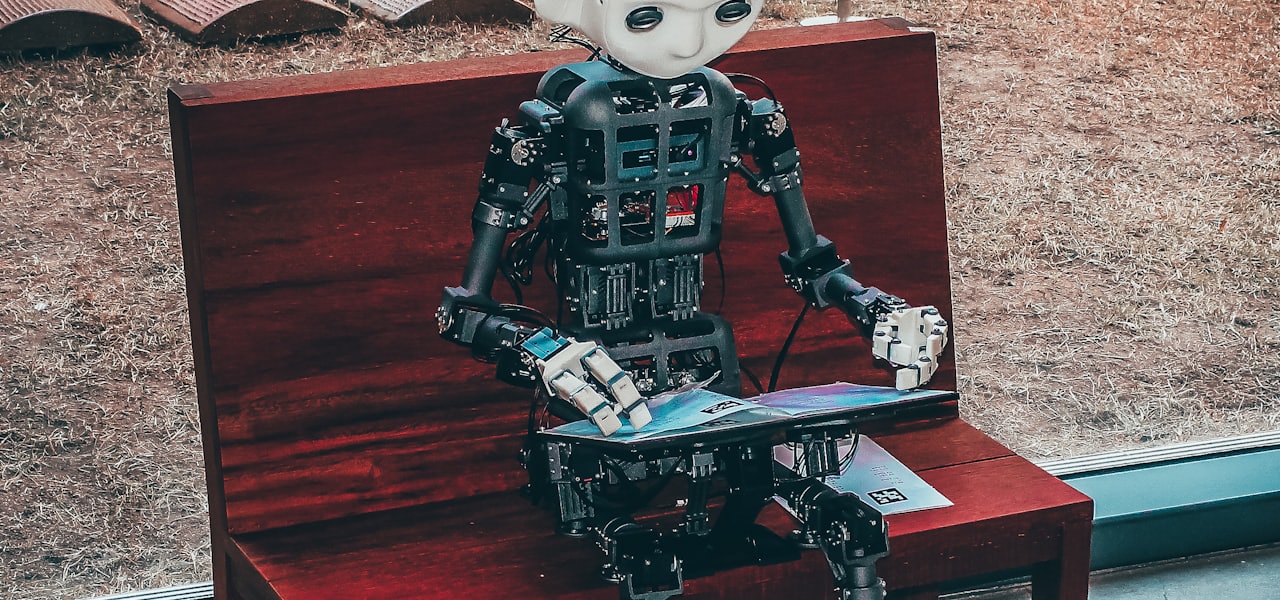
In mechanical engineering, a kinematic chain is an assembly of rigid bodies connected by joints to provide constrained motion that is the mathematical model for a mechanical system. As the word chain suggests, the rigid bodies, or links, are constrained by their connections to other links. An example is the simple open chain formed by links connected in series, like the usual chain, which is the kinematic model for a typical robot manipulator. Mathematical models of the connections, or joints, between two links are termed kinematic pairs. Kinematic pairs model the hinged and sliding joints fundamental to robotics, often called lower pairs and the surface contact joints critical to cams and gearing, called higher pairs. These joints are generally modeled as holonomic constraints. A kinematic diagram is a schematic of the mechanical system that shows the kinematic chain. The modern use of kinematic chains includes analysis of Linkages (mechanical), compliance that arises from flexure joints in precision mechanisms, link compliance in compliant mechanisms and micro-electro-mechanical systems, and cable compliance in cable robotic and tensegrity systems. == Mobility formula == The degrees of freedom, or mobility, of a kinematic chain is the number of parameters that define the configuration of the chain. A system of n rigid bodies moving in space has 6n degrees of freedom measured relative to a fixed frame. This frame is included in the count of bodies, so that mobility does not depend on link that forms the fixed frame. This means the degree-of-freedom of this system is M = 6(N − 1), where N = n + 1 is the number of moving bodies plus the fixed body. Joints that connect bodies impose constraints. Specifically, hinges and sliders each impose five constraints and therefore remove five degrees of freedom. It is convenient to define the number of constraints c that a joint imposes in terms of the joint's freedom f, where c = 6 − f. In the case of a hinge or slider, which are one-degree-of-freedom joints, have f = 1 and therefore c = 6 − 1 = 5. The result in general where d {\displaystyle d} is the degrees of freedom for the mobility of a kinematic chain formed from n moving links and j joints each with freedom fi, i = 1, 2, …, j, is given by M = d n − ∑ i = 1 j ( d − f i ) = d ( N − 1 − j ) + ∑ i = 1 j f i {\displaystyle M=dn-\sum _{i=1}^{j}(d-f_{i})=d(N-1-j)+\sum _{i=1}^{j}f_{i}} Where N is the total number of links and includes the fixed link. Spacial linkages used d = 6 {\displaystyle d=6} and planar linkages use d = 3 {\displaystyle d=3} . This result is known as the Chebychev–Grübler–Kutzbach criterion. == Analysis of kinematic chains == The constraint equations of a kinematic chain couple the range of movement allowed at each joint to the dimensions of the links in the chain, and form algebraic equations that are solved to determine the configuration of the chain associated with specific values of input parameters, called degrees of freedom. The constraint equations for a kinematic chain are obtained using rigid transformations [Z] to characterize the relative movement allowed at each joint and separate rigid transformations [X] to define the dimensions of each link. In the case of a serial open chain, the result is a sequence of rigid transformations alternating joint and link transformations from the base of the chain to its end link, which is equated to the specified position for the end link. A chain of n links connected in series has the kinematic equations, [ T ] = [ Z 1 ] [ X 1 ] [ Z 2 ] [ X 2 ] ⋯ [ X n − 1 ] [ Z n ] , {\displaystyle [T]=[Z_{1}][X_{1}][Z_{2}][X_{2}]\cdots [X_{n-1}][Z_{n}],\!} where [T] is the transformation locating the end-link—notice that the chain includes a "zeroth" link consisting of the ground frame to which it is attached. These equations are called the forward kinematics equations of the serial chain. Kinematic chains of a wide range of complexity are analyzed by equating the kinematics equations of serial chains that form loops within the kinematic chain. These equations are often called loop equations. The complexity (in terms of calculating the forward and inverse kinematics) of the chain is determined by the following factors: Its topology: a serial chain, a parallel manipulator, a tree structure, or a graph. Its geometrical form: how are neighbouring joints spatially connected to each other? Explanation Two or more rigid bodies in space are collectively called a rigid body system. We can hinder the motion of these independent rigid bodies with kinematic constraints. Kinematic constraints are constraints between rigid bodies that result in the decrease of the degrees of freedom of rigid body system. == Synthesis of kinematic chains == The constraint equations of a kinematic chain can be used in reverse to determine the dimensions of the links from a specification of the desired movement of the system. This is termed kinematic synthesis. Perhaps the most developed formulation of kinematic synthesis is for four-bar linkages, which is known as Burmester theory. Ferdinand Freudenstein is often called the father of modern kinematics for his contributions to the kinematic synthesis of linkages beginning in the 1950s. His use of the newly developed computer to solve Freudenstein's equation became the prototype of computer-aided design systems. This work has been generalized to the synthesis of spherical and spatial mechanisms.